DIP with Linstow -Testing how to get people to use a temporary space
Project summary
This project explored how a construction site can remain open, active, and meaningful for people while being transformed into a new neighborhood. Using behavior design, the goal was to encourage “natural movement” through the area by creating inviting experiences, activities, and spatial cues that make people choose to walk through rather than around it.
My role as a designer
As a designer, I worked with user insights and behavior design principles to shape concepts, test hypotheses, and develop interventions such as wayfinding, temporary installations, and community-focused activities. I contributed to the design process from research and ideation to prototyping and real-world testing, helping translate insights into tangible solutions that activated the space and informed future development decisions.
Project by: Mads Brun Høy, Svein Gunnra Kjøde, Jacob B Pettersen
Project length: 4 months
Where: Æra Strategic design
When: 2025
Goal of project
The project explores how a construction site can remain open, active, and meaningful while being transformed into a new neighborhood. Instead of closing off the area, we aimed to create reasons for people to move through it. By combining place development with behavior design, the goal was to test how small, temporary interventions can shape movement, activity, and social life over time.
The location
The project takes place at the former Veterinary School in Oslo — a large area in transition, surrounded by existing neighborhoods, students, and workplaces. While parts of the site are already in use, it will continue to develop over many years. This makes it a unique testing ground for how a place can evolve gradually, while still being open and relevant to people in their everyday lives.
User groups and needs
We mapped a diverse set of users around the site — including neighbors, students, workers, and visitors. Across these groups, shared needs emerged: places to pause, meet, move through, and feel safe. The project focused on creating low-threshold opportunities for activity and social interaction, while supporting both everyday use and more spontaneous experiences.
Organizing ideas
Insights and ideas were developed and structured through collaborative workshops and iterative mapping. We translated research into concrete opportunity areas such as movement, social interaction, and temporary activation. This helped align stakeholders and created a shared foundation for testing and prioritizing interventions in the space.
It was my role to sort the ideas n MIRO.
More concrete
From early insights, we developed and tested a range of concepts — from spatial interventions to services and programming. The focus was on simple, tangible actions that could be implemented quickly and evaluated in real life. This allowed the project to move from abstract strategy to concrete experiments that could inform future development.
The Neighborhood table
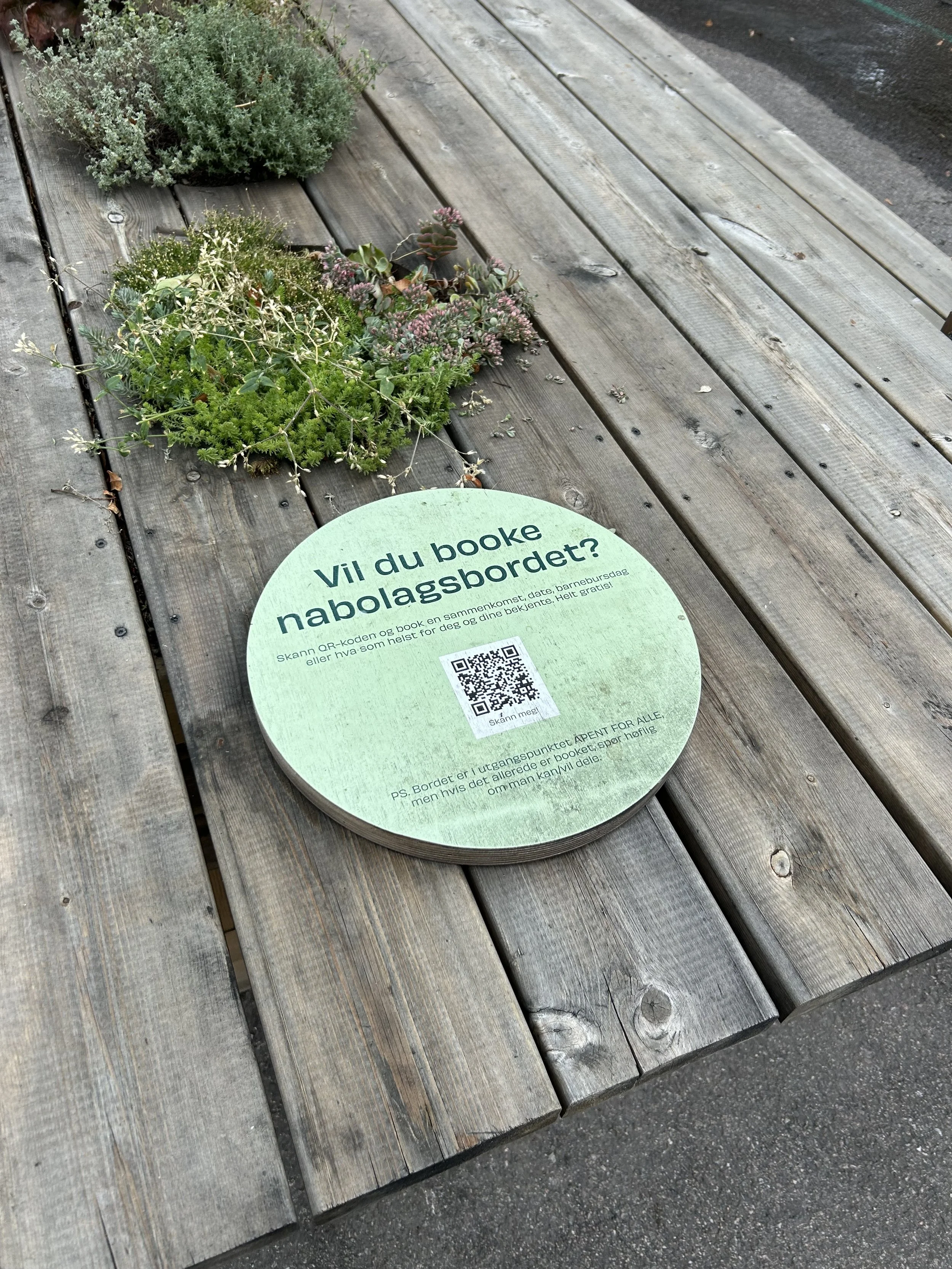
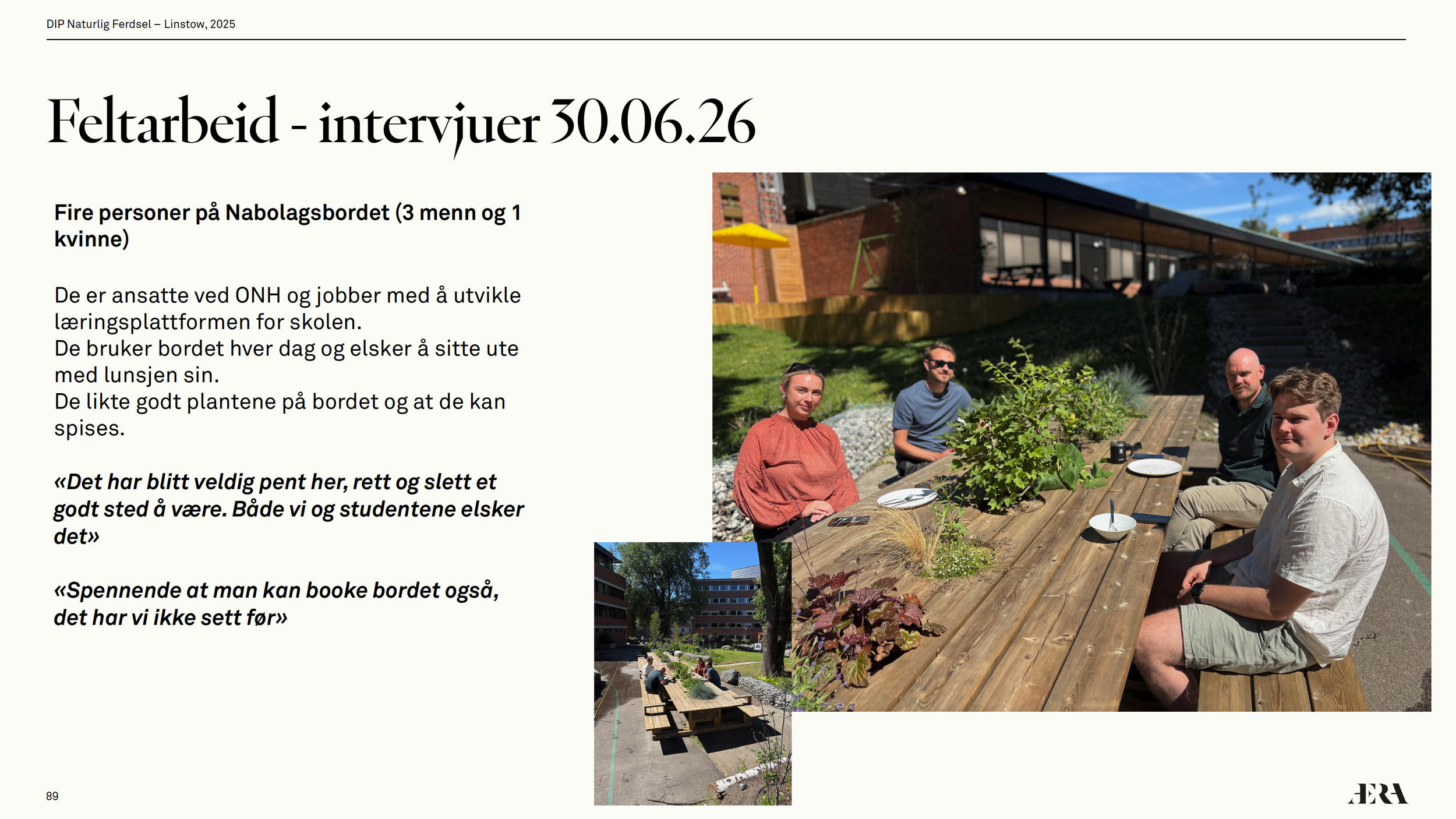
The “Nabolagsbordet” (Neighborhood table) is a simple but powerful intervention designed to create a shared social space. By adding seating, edible plants, and the possibility to book the table, it invites both spontaneous use and planned gatherings. The concept lowers the threshold for interaction and gives people a reason to stay — not just pass through.
I designed the illustrations to visualize the service.
Directive lines
The “green lines” act as a subtle wayfinding system, guiding people into and through the site. Instead of traditional signage, the intervention uses playful, visual cues on the ground to spark curiosity and signal that the area is open. It demonstrates how small design gestures can influence movement patterns and make a place feel more accessible.
My colleagues and me designed where the lines should go.
The Open sign
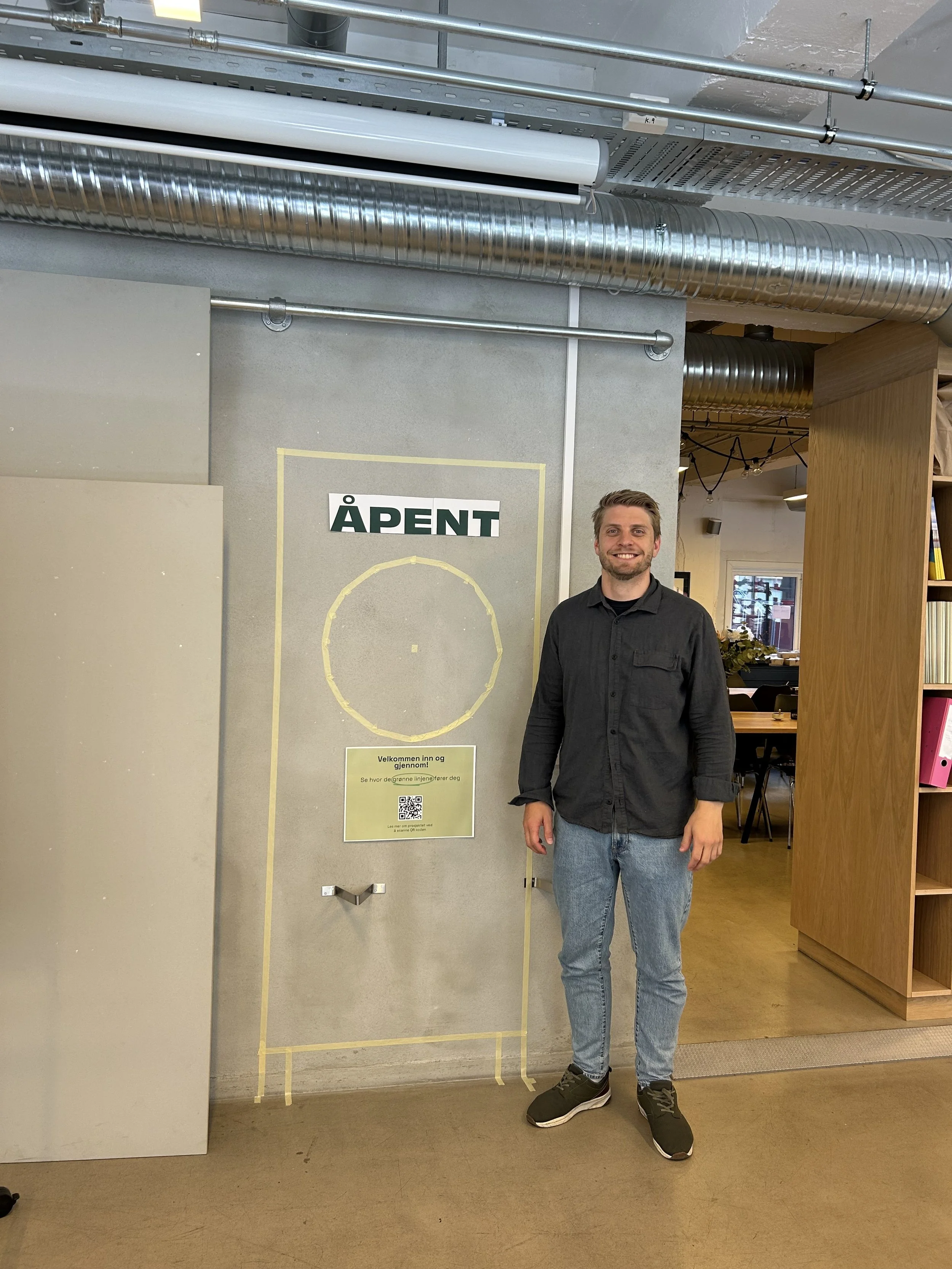
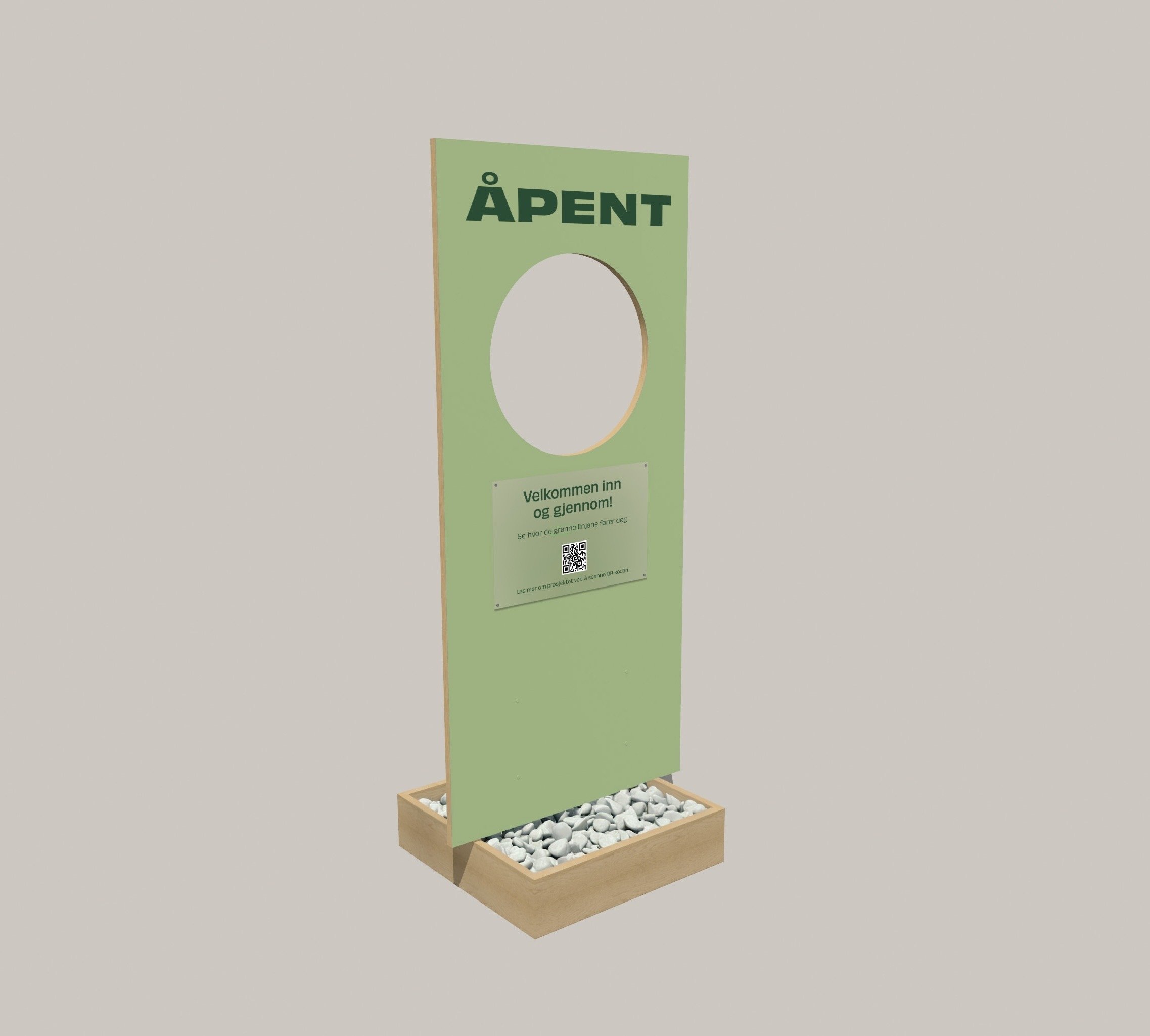
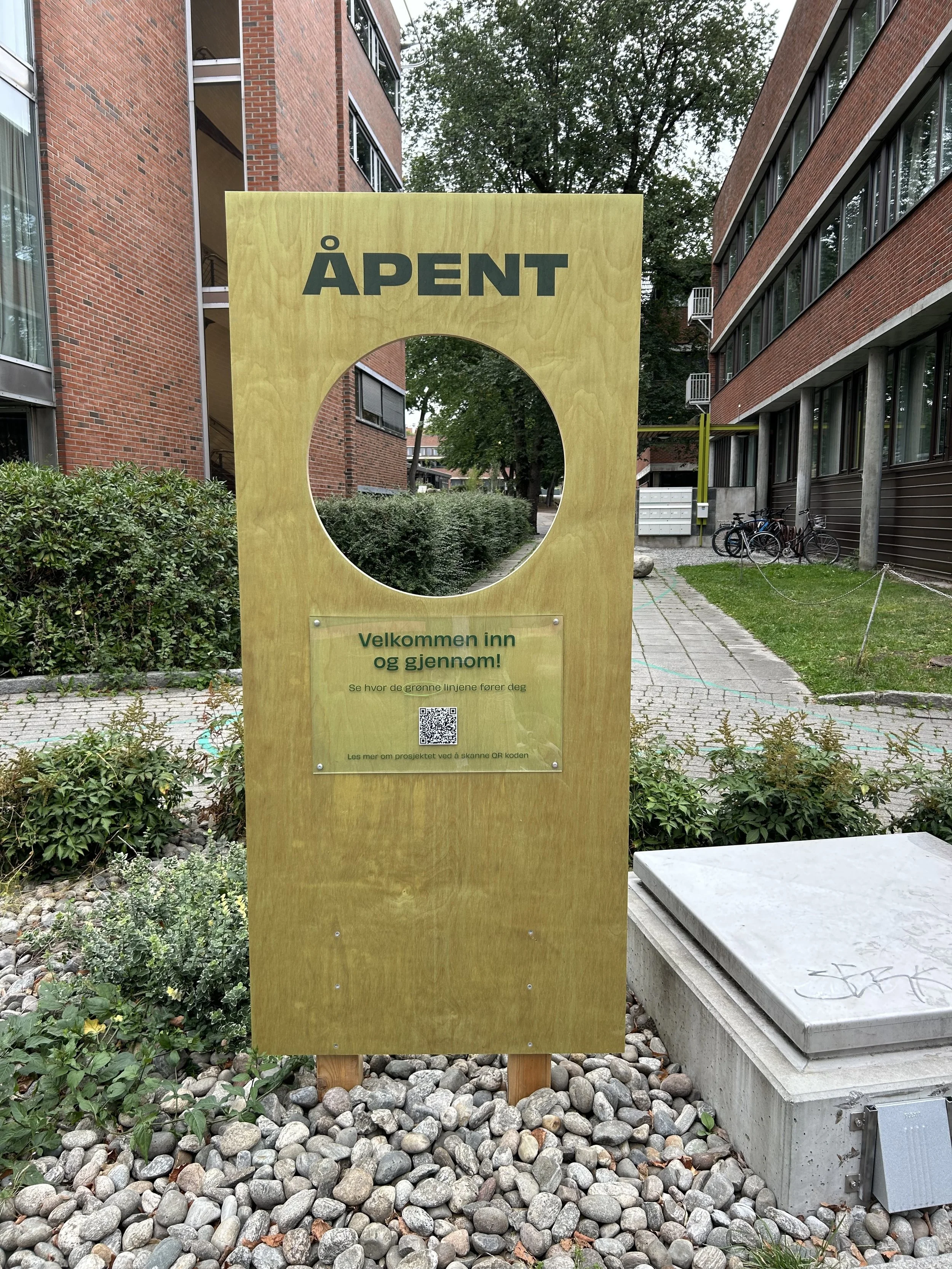
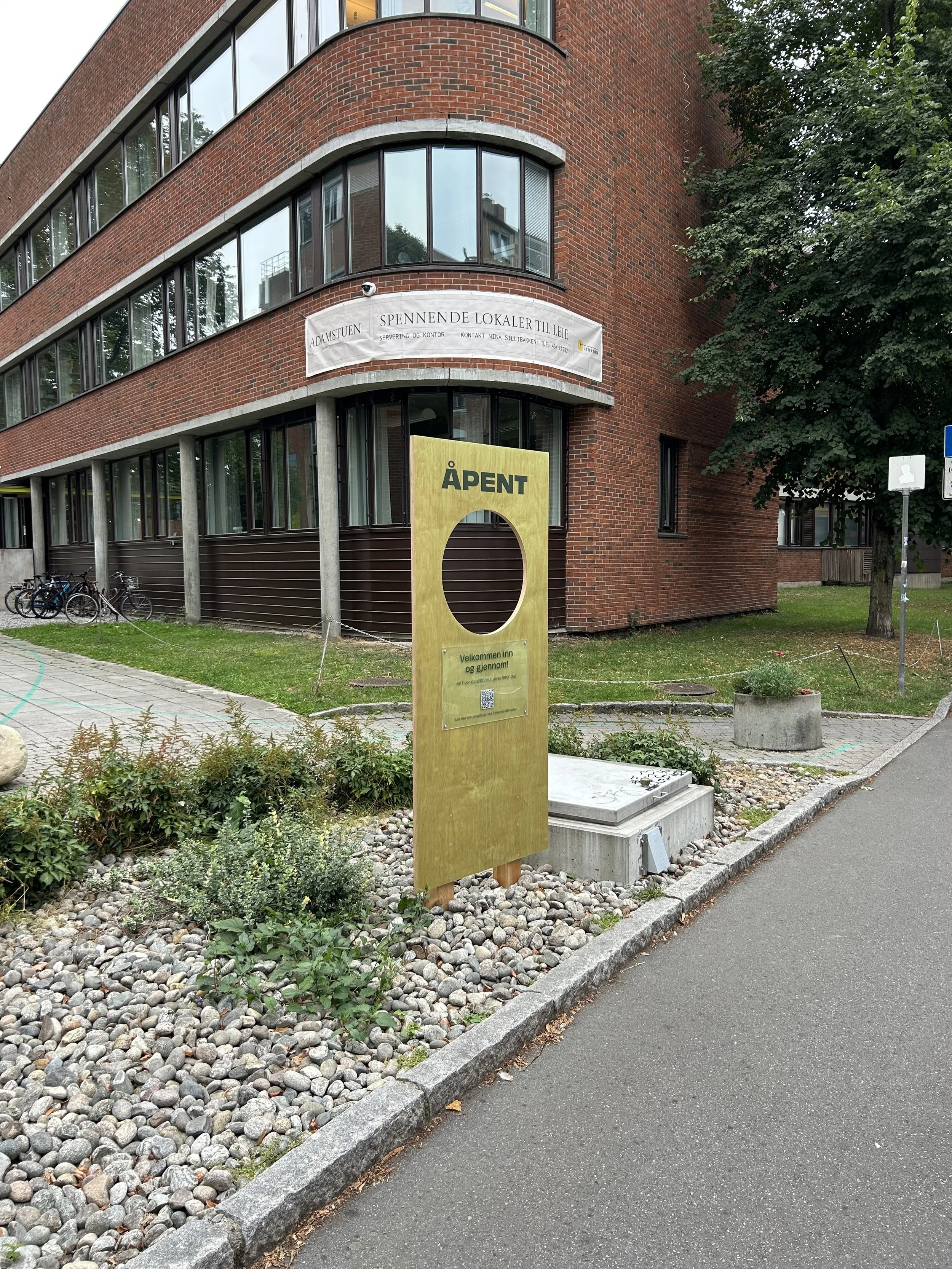
The “ÅPENT” (Open) concept works as both a physical and communicative signal. It clearly tells people that the area is accessible — even during construction. By combining visual identity, signage, and messaging, it lowers the barrier to entry and encourages new behavior: entering a space that would normally feel closed.
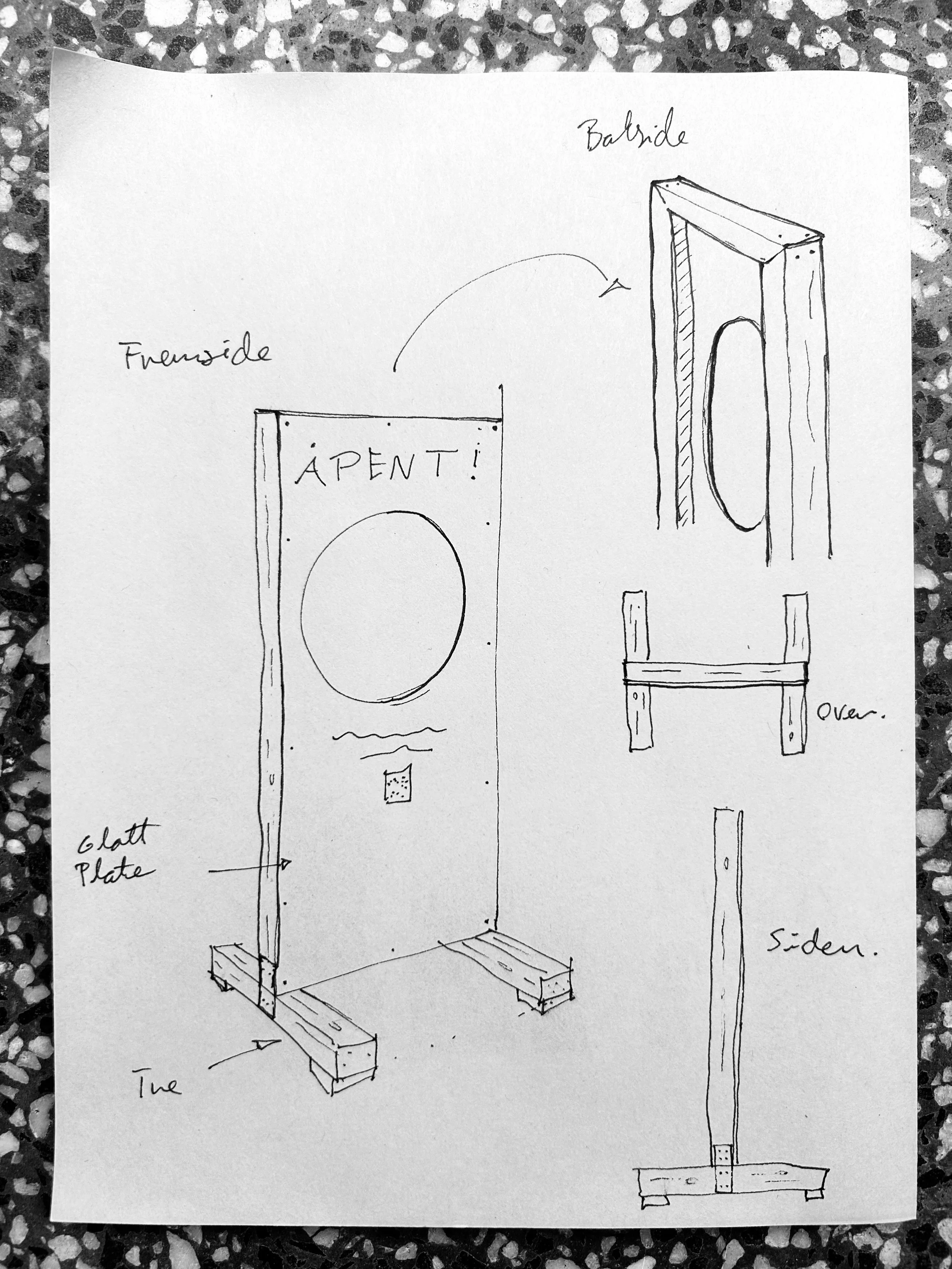
I designed and developed the physical sign — from early sketches to final execution — including drawing, 3D modelling, and shaping its visual expression as a key element of the concept.
How everything connects
The project is built on behavior design principles — linking motivation, ability, and opportunity. Through interventions like wayfinding, social spaces, and programming, we create triggers that invite people in, make it easy to participate, and reinforce positive experiences over time. Together, these elements gradually establish new patterns of use in the area.
User interviews
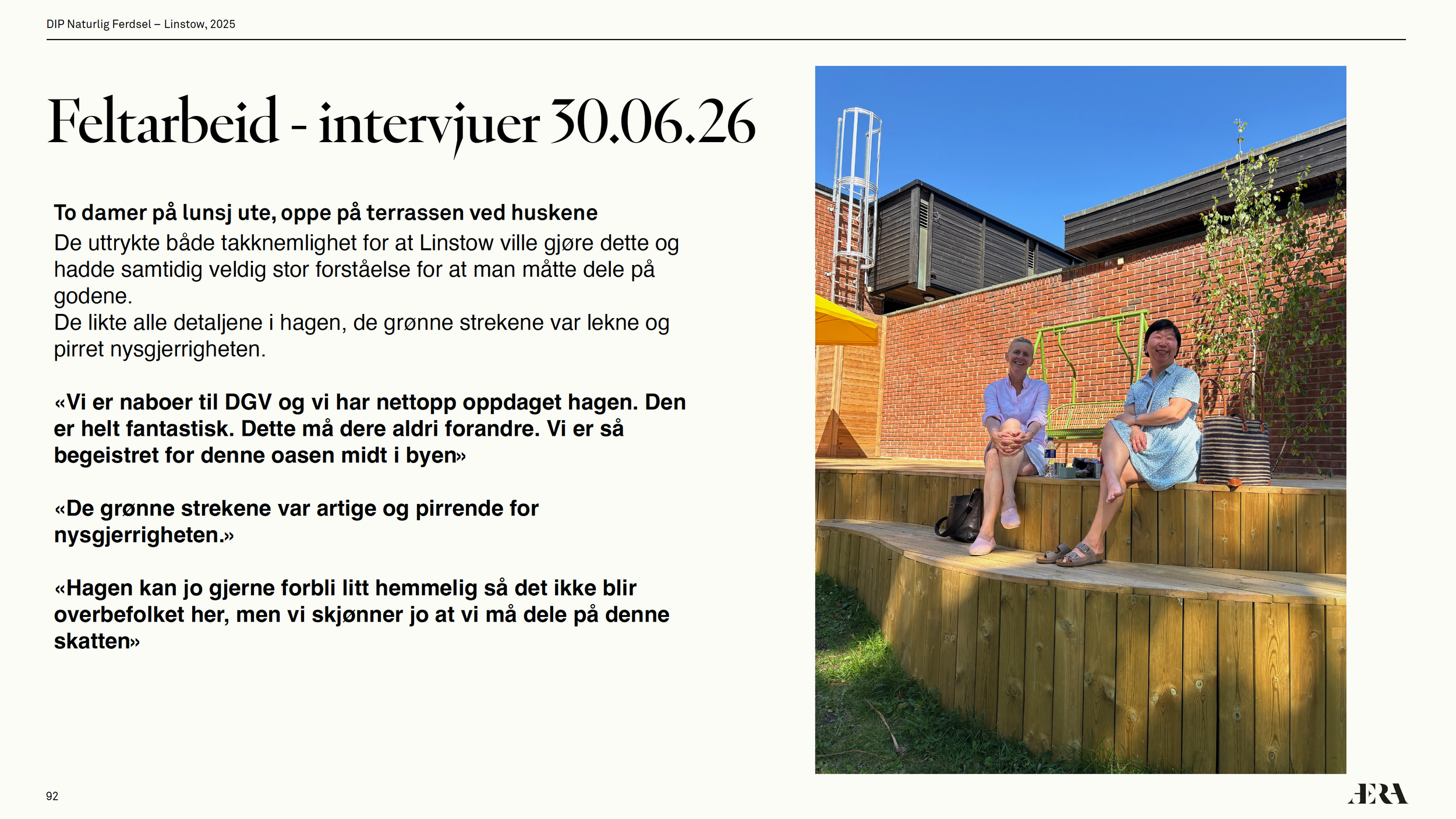
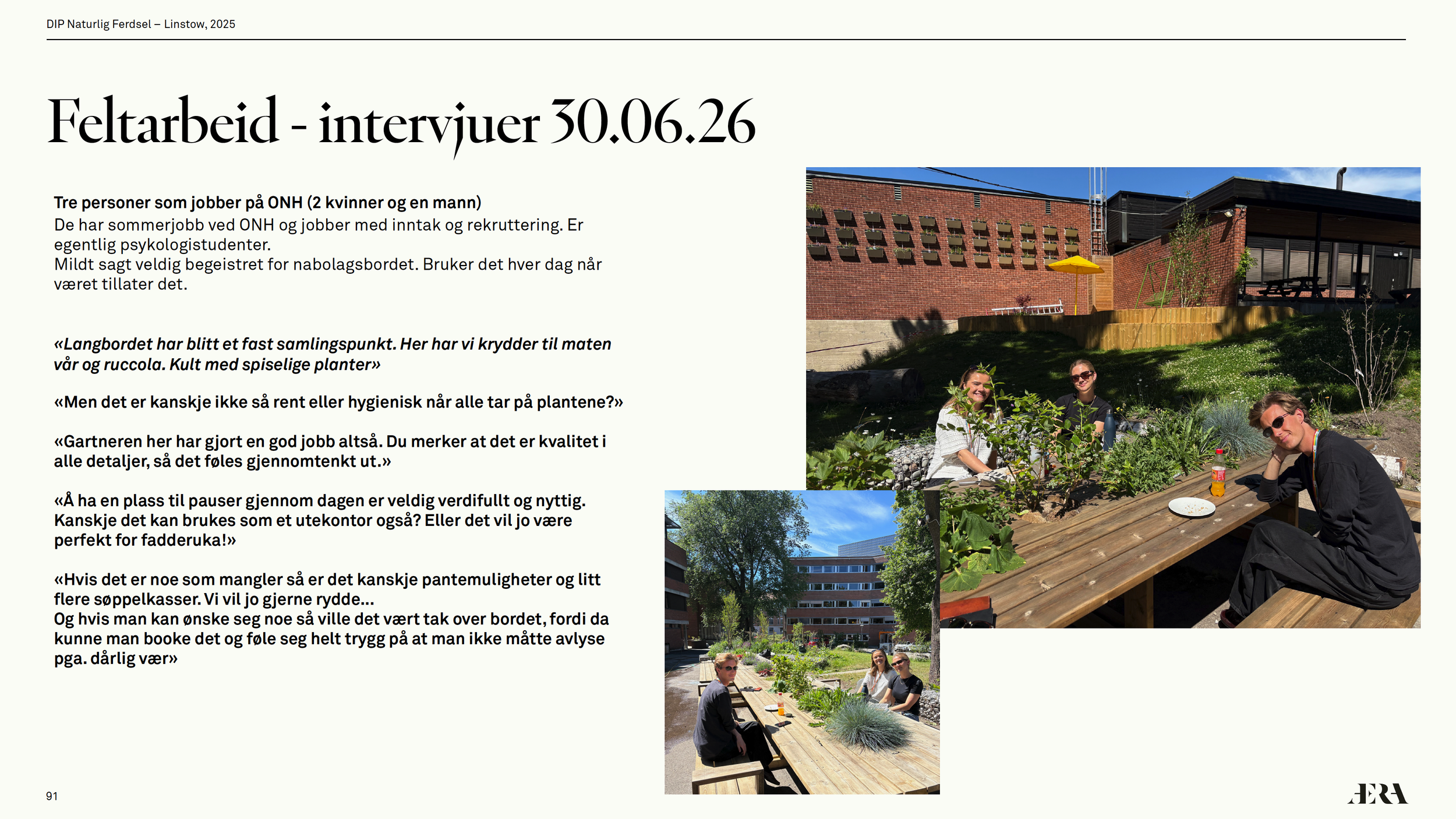
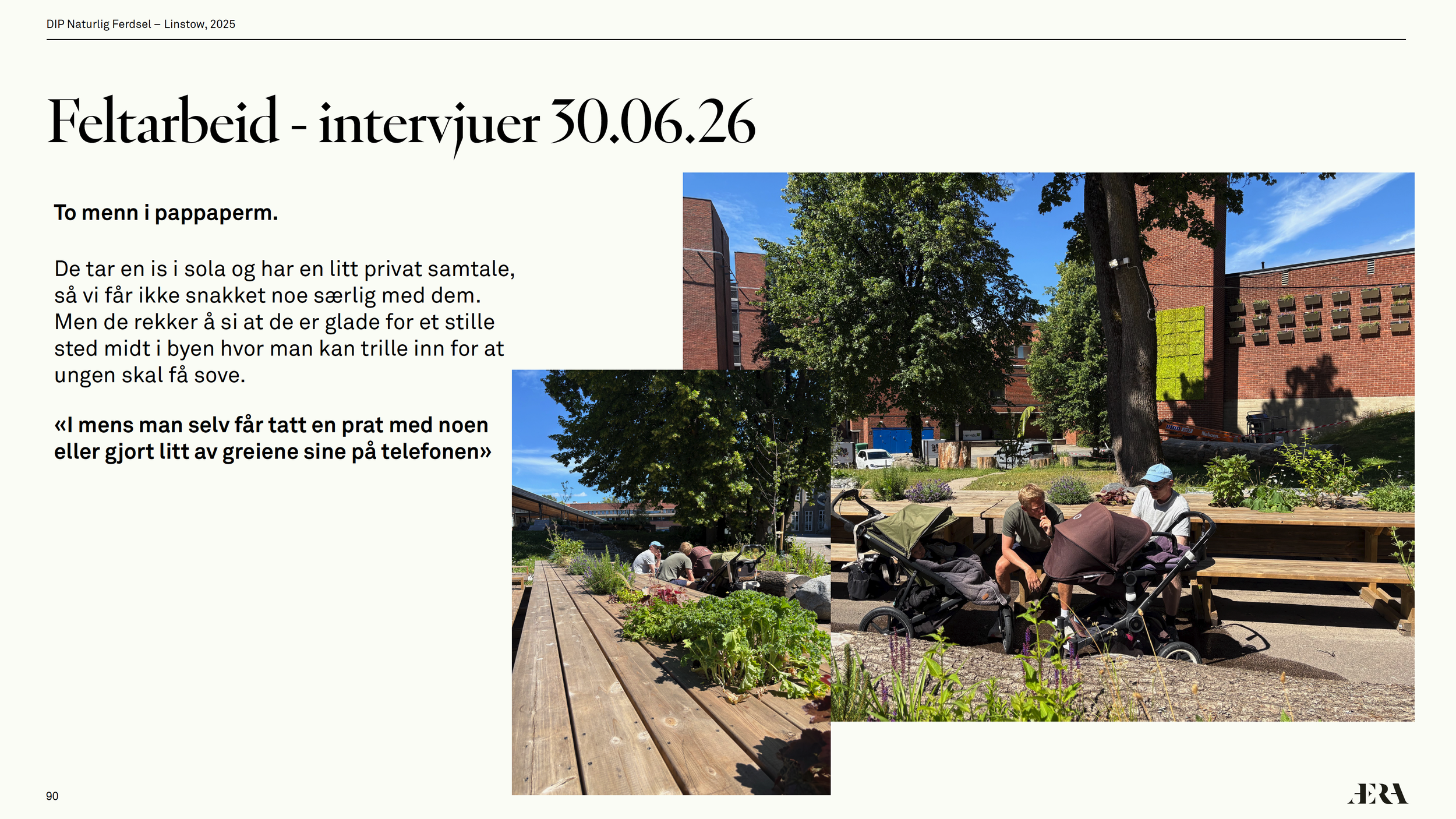
Field interviews showed how people actually used the space — from quiet breaks to social gatherings. Users valued the calm atmosphere, the greenery, and the possibility to sit and stay. Small details, like edible plants or the ability to book a table, created a sense of ownership and delight, while also revealing opportunities for further improvement.
What we learned
The project shows that small, targeted interventions can meaningfully change how people use a place. Temporary measures can activate areas, build identity, and generate valuable insights before permanent decisions are made. It also highlights the importance of involving users early and continuously in shaping the development of a neighborhood.